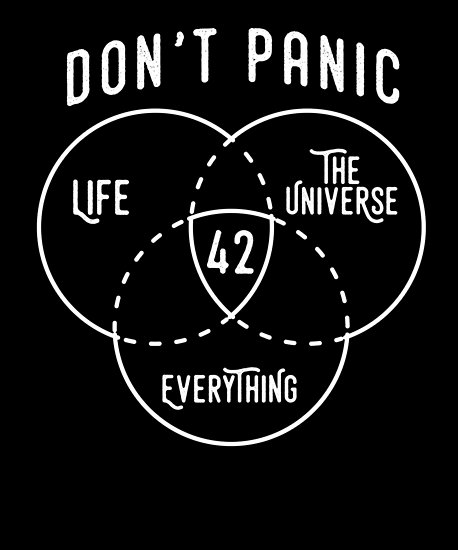

For those of you who don’t know (shame on you!), “42” is the “Answer to the Ultimate Question of Life, the Universe, and Everything,” according to the must-read Douglas Adams’ The Hitchhiker’s Guide to the Galaxy. Calculated by the supercomputer Deep Thought after 7.5 million years, the number represents a joke about the search for meaning, chosen because it seemed “ordinary” and random.
In the story, the answer is known, but the ultimate question is not, making the answer seemingly nonsensical.
Digital solutions are built on questions, but organizations know just their own answers
Discovery phase in software or project is the initial, pre-development stage aimed at deeply understanding user needs, business goals, and technical feasibility. It bridges the gap between an idea and development by defining scope, mitigating risks, validating concepts, and producing actionable requirements, such as a Product Requirements Document (PRD).
This is happening after a rough estimation of the investment based on the answers an organization thinks to know. After the discovery phase, expectation can not meet reality, because with the right questions you have to guide organizations through a journey in which they believe it is fair to pay 10 and at the end they realized they have to pay 100.
Later on, they are shocked so they ask Google why this is even possible, and then find out you were right…

After the denial, it comes the resistance to change
A denial, a denialA denial, a denialA denial, a denialA denial, a denialA denial
If you have read this quote while singing, you know that this is the epic end of the Nirvana’s “Smells Like Teen Spirit”. And you don’t know how much I would like to scream like Kurt Cobain here.
Most of the people reading this blog know that I’m working on a special proposal for the Foodservice Community since 18 months, and this is what is happening: resistance to change.
It is often viewed as a single type of behavior, but in reality it takes many forms, and recognizing these forms is the difference between managing it and being at its mercy:
- Opposition is the most visible form: someone openly states that they do not agree with the project’s objectives, priorities, or impacts. It is not the easiest situation, but at least it is clear, and what is clear can be managed.
- Obstructionism is the most complex: here, the disagreement concerns not so much the stated intentions as the actual execution. Decisions are delayed, activities go unsupported, steps are continually put back up for discussion; the project remains formally active but struggles to move forward.
- Boycotting is insidious: on the surface, everything seems to be proceeding, but strategic choices are not truly supported. Priorities shift elsewhere, resources don’t arrive, management’s attention shifts, and the project loses ground without any open conflict.
- Inertia is a massive burden: no explicit opposition, no declared resistance, things simply don’t happen. Decisions aren’t made, activities don’t get started, responsibilities remain unresolved; it’s the quietest form, but often the hardest to deal with.

Step away from toxic customers
When I have to quit a digital project, my mantra is always:
I don’t leave when it gets hard, I leave when it gets disrespectful
It happens frequently during my whole career in supply chain, construction industry, and more, to have people inside my company or inside my customer’s company trying to delegitimize me or my credibility.
I get it. I’m an uncomfortable presence. I can’t please everyone, because I usually stand still in what I believe. And, above all, I can argue.
But on the other hand, here is my final advice: beware of all the Gríma, called (the) Wormtongue that surround you.

—–
Stay data-hungry. Stay data-foolish.
Your Friendly Neighborhood Digital Consultant