


When I have to explain what a paradox is, the first thing that comes to my mind is, of course, the movie Back to the Future.
Marty and Doc never had have had brought the time machine to 2015. That means 2015 Biff could also not had have had brought the almanac to 1955 Biff. Therefore, the timeline in which 1955 Biff gets the almanac is also the timeline in which 1955 Biff never gets the almanac. And not just never gets. Never have, never hasn’t, never had have hasn’t.
BIM standards: quality or bureaucracy?
While standardization (common languages, protocols, licenses) is necessary for collaboration, it can narrow the design space and create “systemic stagnation,” where new ideas are stifled by the rigid, established standards.
In the architecture, engineering, and construction (AEC) industry, of which Foodservice Equipment and Supplies Industry is an infinitesimally smaller subset in terms of designers and planners, this vision has taken shape through the promise of interoperability, the idea that different actors, tools, and datasets can work together through shared principles.
Unfortunately, most of the time, standards reveal how openness and sharing-principles foundational fuel both innovation and exploitation.
Breaking bad: moving beyond established standards towards a new balance
Call me “the Walter White of digital consultants”, if you care, but I truly believe that standards make sense only if adaptive (like OpenAPI, GraphQL, blockchain).
Otherwise, in our Industry, we will replicate ad infinitum the Blu-ray vs HD-DVD format war, that highlighted how the dominance of a standard often relies more on backing and network effects than on technical superiority.
Every standard begins as an act of rebellion against chaos.
But guidelines should be written to provoke thinking and not be repackaged as ready-made answers.
In many cases, companies with significant market power or first mover advantage can influence the direction of standards.

“Show me the example”
In trying so hard to conform, organizations end up fragmenting.
Each develops its own sacred template, its own “best practice” that can’t quite talk to anyone else’s.
The commons dissolve into a patchwork of micro-bureaucracies, each convinced it’s following the standard to the letter. The very structure designed to unify us becomes the seed of a thousand little silos.
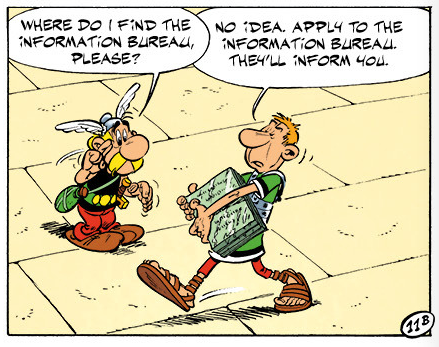
We discuss “information management” as if the goal were to possess data rather than to comprehend it. And still, in all committees, I haven’t see an example yet, other than Word or Excel docs. Once they realize then that there is a need to solve these issues from a tech/software perspective and not through PDFs or TXTs, just give me a call.
In the meantime, believe me:

—–
Stay data-hungry. Stay data-foolish.
Your Friendly Neighborhood Digital Consultant