

Shortly approaching Halloween, what scares the hell out the whole Foodservice Equipment and Supplies industry? More than Freddy Krueger, IT, Sandman and Grim Reaper combined?
Easy-peasy.. Revealing prices to the market! Wait.. What???
We can’t put pricing on the website or on quoting software, competitors will see it, and we want real customers to call us directly and ask for prices.
I hear this constantly. It’s almost always the wrong instinct.
I have to tell you: your pricing is not a secret
Let’s kill the competitor fear first. Across the engagements I’ve been part of, I’ve never once failed to find a competitor’s price, usually it’s on their website; worst case, it’s a day of digging one phone call posing as a buyer. You’re hiding from people who can already see you.
Meanwhile, hiding your price costs you the buyer who’s actually ready to buy.
Here’s what transparency does instead:
-
-
- It builds trust. Harvard ran a study: a store that openly showed its costs and margin saw purchases rise by 22%. Cost transparency beat every other kind of transparency. People reward you for showing the math.
- It speeds your pipeline. A prospect who sees the price and the logic self-qualifies before they ever reach sales. Fewer tire-kickers, faster closes, easier negotiations because you’ve preloaded the anchor.
- It signals fairness. If a buyer can’t explain why they got their price, the price feels arbitrary — and arbitrary erodes trust. Clear, predictable pricing does the opposite.
-
The one real exception: pricing is genuinely too complex to put on a page, or legacy market quirks you’re protecting.
Then fix the complexity. Don’t hide behind it.
Transparency isn’t giving away leverage. It’s the cheapest trust you’ll ever buy. My question is:
Is your pricing off your site to protect the customers or to protect you from awkward conversation?
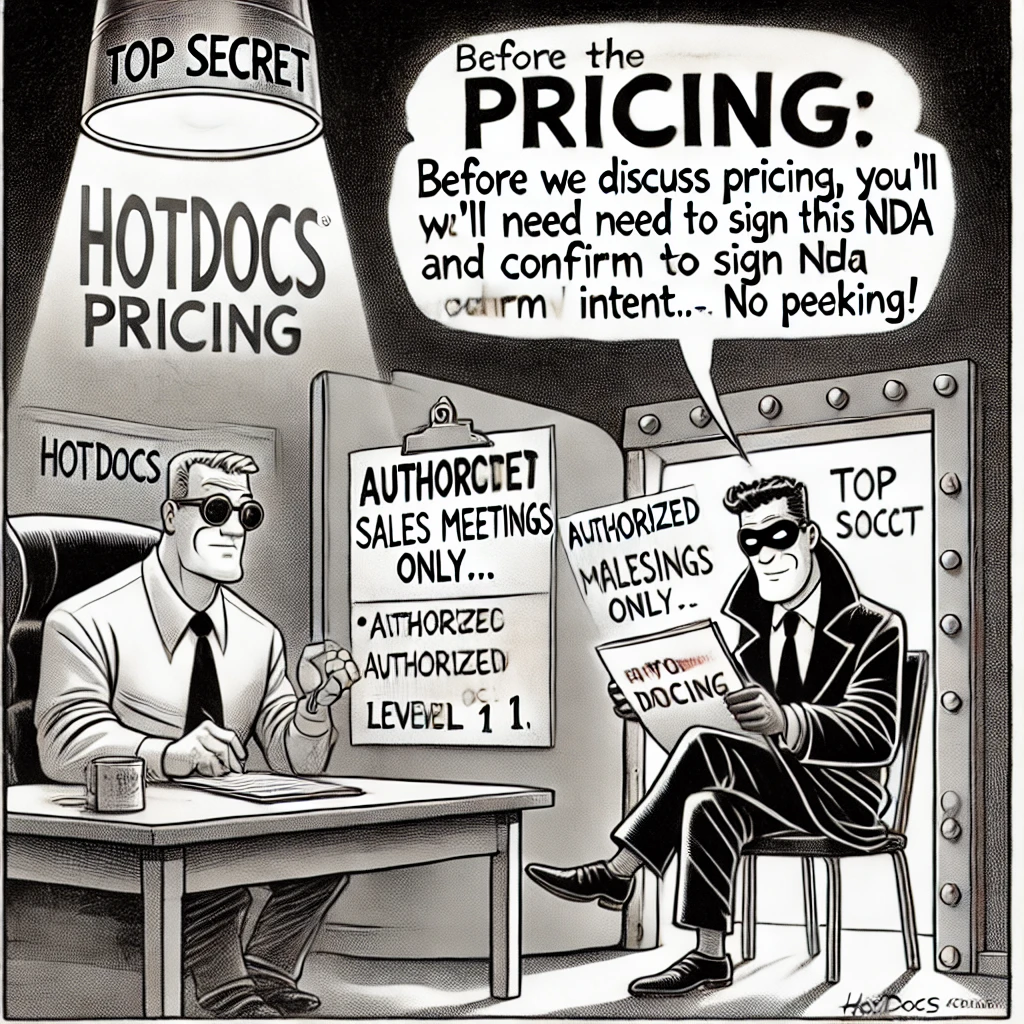
Believe it or not, your pricing is everywhere
Sharing an Excel file or a PDF catalog with prices, a WeTransfer link or a USB key (!) is even worse than being public, because you have no control over that data anymore.
If on one side, doing this is convenient and widely used, on the other side, it carries significant risks to the confidentiality, integrity, and availability of the information:
-
-
- They are easily copied, forwarded, and stored on personal devices, so information can spread well beyond its intended audience
- They lack robust version control, so multiple copies circulate and it becomes unclear which is authoritative
- They may execute malicious code, making them a common carrier for malware and phishing attacks
- They can become corrupted, lost, or deleted, and large workbooks may crash or fail to open
-
Uncontrolled distribution makes it difficult to demonstrate accountability or respond to data subject requests.
I scared you even more, didn’t I? But there are tons of solutions to this problem, you just need to ask your digital consultant for help.

The hard truth: would you buy from Amazon if you are not able to find prices?
If I can’t find a price, that’s usually a sign something is off, and I wouldn’t commit to buying until I understood why.
The core principle is simple: I wouldn’t pay for something without knowing the price in advance. If the price can’t be found or verified, I’d just buy elsewhere.
Everything in business is happening faster and faster these days. You are missing opportunities by making wrong assumptions. Pay attention.

—–
Stay data-hungry. Stay data-foolish.
Your Friendly Neighborhood Digital Consultant