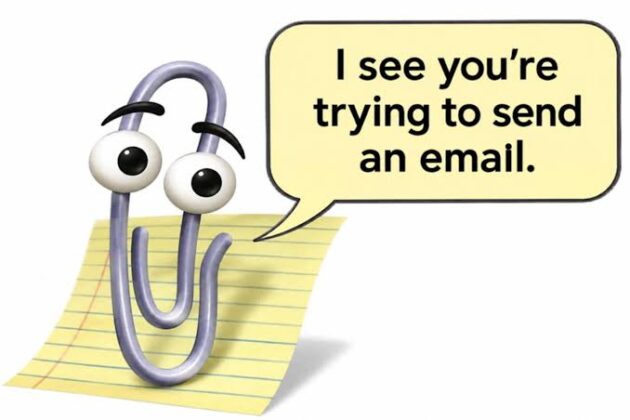

Last Friday Microsoft 365 had a day off. Unfortunately, so was half the world. Outlook down. Teams struggling. Copilot affected. Even ChatGPT and Claude felt it.
Maybe putting all our digital eggs in one Big Tech basket isn’t the best idea, in the context of this new hybrid warfare.

“The Net” or “Johnny Mnemonic” don’t look just like sci-fi movies anymore
What is most concerning is what is emerging in terms of a global technological dependence on a few large providers, whose infrastructures now support a significant portion of the daily activities of businesses, public administrations, and organizations across every sector.
We have no reports of direct impacts on the operations of essential services, but we cannot rule out the possibility that current events are, at the very least, slowing down processes and activities or, in some cases, even bringing them to a halt. The issue, in fact, is not merely the unavailability of a single service, but the potential ripple effect of these disruptions across all organizations that depend on it, including those that provide critical services.
These incidents highlight a systemic risk: the concentration of digital services, cloud platforms, and collaboration tools in the hands of a few providers creates common points of dependency, where a malfunction can have international consequences.
The Day Architecture Stopped
In 2022, Autodesk Construction Cloud went down for hours, derailing architects’ deadline-oriented sprints and underscoring a craving for slowing down.
“The loss of revenue that day had to be six figures in our local office alone—I can’t imagine the costs incurred at the global level.”
Says a project architect at the Chicago branch of a large multinational architecture firm. Work at his office collapsed.
“Every single junior person at the firm who was in documentation was just like, ‘What do we do now?’” he continued. “I told them to take a coffee break, then an early lunch, then after lunch, I didn’t know. It went on for six-plus hours.”
When computers came on the scene in the 1970s, they were considered potentially liberating both in form and in labor.
Not only could computers be employed to create complex folding, curving, and deconstructed forms, but all that office time wasted on bureaucracy, pesky drafting, blueprints, and cataloging would soon be consolidated, thus leaving the architect free to pursue their creative form-making pursuits.
This is what happened in reality instead: rather than freeing up architects to create new and more thoughtful forms, CAD software merely increased the number of projects firms could take on at one time. This ease of execution enabled architects to churn out (shitty, imho) similar-looking buildings, along the path of least resistance.
Does this ring any “AI” bell at all? (Sorry for the digression).

Digital Sovereignty: “In medio stat virtus” Aristotle said in his Nicomachean Ethics
These issues must also be addressed in terms of resilience and digital sovereignty.
It does not necessarily mean abandoning major providers; rather, it means ensuring that a technical or operational failure at a single provider cannot jeopardize entire economic supply chains or public services. We therefore need strategies for operational continuity, redundancy, supplier diversification, and a tangible capacity to provide alternative services when the primary infrastructure is unavailable.
As a business or as an organization, you have the mandatory task of maintaining full control over your own digital destiny:
-
-
- data
- infrastructure (cloud, servers, networks)
- code
- standards
- artificial intelligence
-
And if you don’t know where to start, just give me a call.

—–
Stay data-hungry. Stay data-foolish.
Your Friendly Neighborhood Digital Consultant