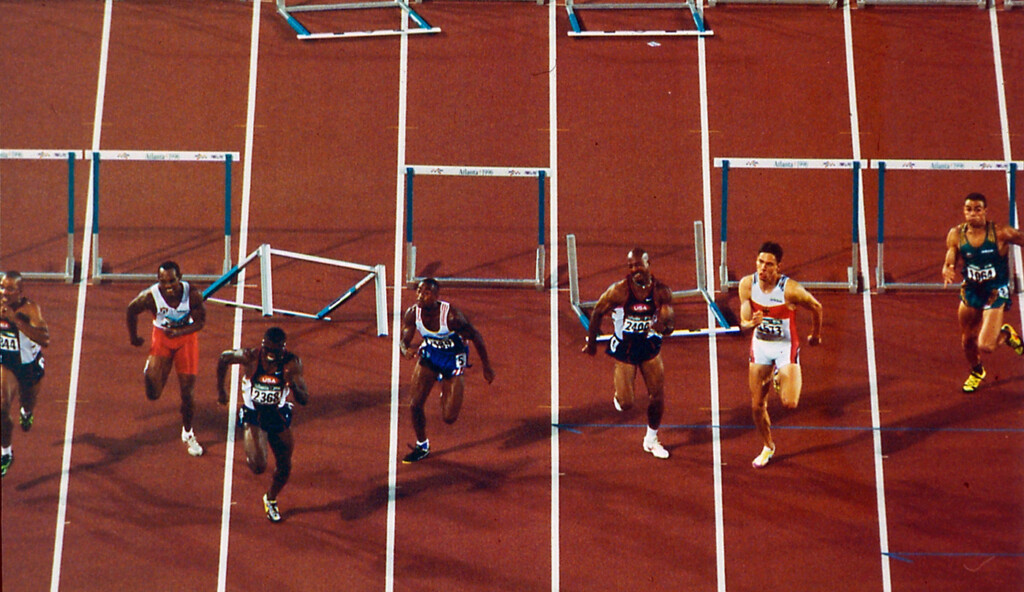

Track and field is a sport that includes many different kinds of athletic contests that are based on running, jumping, and throwing.
The United States Olympic trials for the sport of track and field is the quadrennial meet to select the United States representatives at the Olympic Games.
Like for athletics, the digital world also has its own “trial”, that instead of qualifying a software for the Olympics, gives a software the opportunity to be selected for a company to solve problems.
Art galleries, libraries and… software
People usually go to museums and look at four hundred paintings in an hour and a half. They come back with swollen feet and go looking for a lukewarm Coke to forget the experiment.
Places where paintings are kept are called art galleries, just as places where books are kept are called libraries. No one goes to a library and reads all the books.
Someone who goes to an art gallery, a museum, should go and see two paintings. At first, in my opinion, even just one.
If you agree with me, please apply this best practice when you are testing a software during a trial period.
Why you’re doing free software trials all wrong
Software trials are like a test drive for your business tools. They typically give you full or limited access to a platform’s features for a set period, usually 14 to 30 days. This lets you explore the system, try its capabilities, and decide if it’s worth the investment. But here’s the catch: how often do you sign up for a trial only to forget about it?
What are the common mistakes that users often make during trials, and more importantly, how do you avoid these major pitfalls?
-
- Mistake no. 1: excluding your team
- Mistake no. 2: not testing real scenarios
- Mistake no. 3: not sending feedback or requesting support
Your experience during the trial is valuable not only to your team but also to the software provider. Share your feedback with them, highlighting what works well and what doesn’t.
Why providers appreciate it: constructive feedback helps developers improve their software, making it more tailored to your industry’s needs.
In many cases, the development team may find your suggestion insightful enough to implement a solution. The result? You receive a “custom” feature for free… something that might otherwise come at a premium.
WARNING! You do not need to test every single feature during a software trial period; instead, focus only on your core workflow needs, essential tasks, and critical integrations. Trying to learn every tool often leads to wasted time and confusion rather than a clear purchasing choice.
And please… don’t create fake accounts with multiple emails just to keep going… WE ARE WATCHING YOU!
Remember that ‘Close’ button you’ve been pressing for thirty years?
WinRAR is officially the most absurd and brilliant case study in the history of global software.
For decades, millions of us have seen the same message: ‘Your trial period has ended.’ And for decades, we simply closed the window and continued using it as if nothing had happened.
It wasn’t a programmer’s mistake, but a masterful strategy. By letting private users use it ‘for free’, Eugene Roshal transformed the .RAR format into a global standard.
The real profit? It came from large companies, forced to pay for licenses to comply with internal regulations and avoid legal scrutiny. A perfect symbiosis of meme and business.
Before the cloud and Google Drive, WinRAR was the only way to exchange large files. An empire built on a button that almost no one ever clicked: ‘Buy License.’

—–
Stay data-hungry. Stay data-foolish.
Your Friendly Neighborhood Digital Consultant