
When I joined the fabulous world of software in the early 2000s, software purchasing primarily involved buying perpetual licenses for one-time flat fees. Physical software was sold in boxes containing CDs or floppy disks. The legal agreement (EULA) was printed on paper inside or on the outside of the packaging.
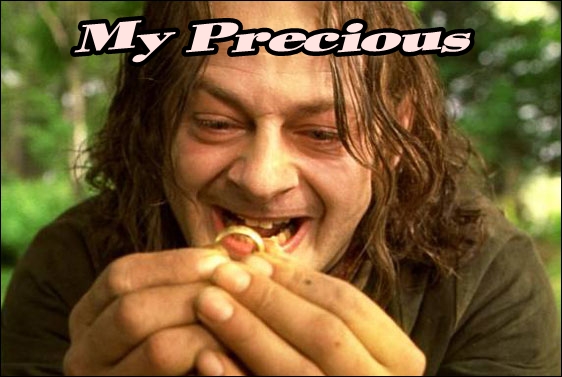
You bought it (at a premium), you owned it. Forever.
The Great Race
Digital payments were in their infancy, with early platforms like PayPal (founded in 1998) just starting to revolutionize online transactions, and, consequently, software purchasing as well.
Over the last 20 years, software licensing has fundamentally shifted from upfront ownership to flexible, cloud-delivered models. Today, the industry relies on a mix of six primary licensing frameworks: Perpetual, Subscription (SaaS), Concurrent, Per-User/Per-Device, and Freemium/Open Core, Token / Credit-Based, transforming software from a capital expense into a scalable operational cost:
-
-
- Perpetual Licensing: The traditional “buy once, own forever” model, as mentioned above (now out of use)
- Subscription / SaaS: The most dominant modern model. Users pay a recurring monthly or annual fee for continuous access to the software, which is hosted and updated automatically by the vendor
- Concurrent / Floating: Instead of licensing individual users, organizations buy a shared pool of licenses. Software access is granted to anyone logged in until the maximum pool of simultaneous uses is reached
- Per-User / Per-Device (Node-Locked): The license is attached directly to a specific user (Named User) regardless of the device they use, or locked strictly to one physical piece of hardware
- Freemium / Open Core: A hybrid model where the core software (or a baseline tier) is free, but vendors charge for premium features, enterprise support, modular add-ons, or higher usage limits
- Token / Credit-Based: Users purchase a pool of “tokens” that they spend dynamically as they access different features, add-ons, or products in your portfolio
-
Most recently, instead, software became like our utilities at home.
Driven by services like API calls, compute hours, data storage, or active transactions, we are moving into the Usage-Based (Consumption), a “pay-as-you-go” framework where customers are billed based on their actual consumption, like your electrical bill, gas bill, water bill, internet bill.
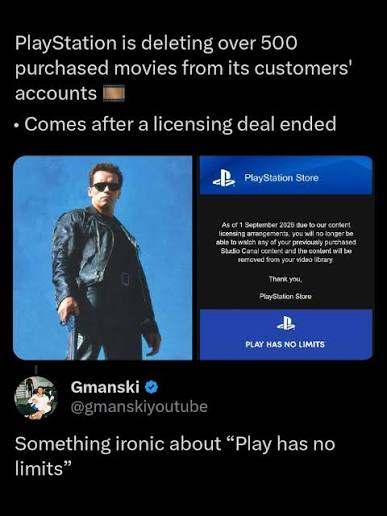
This way, companies can not really predict how much they are going to spend, and like the streaming war taught us, you own nothing than liabilities anymore.
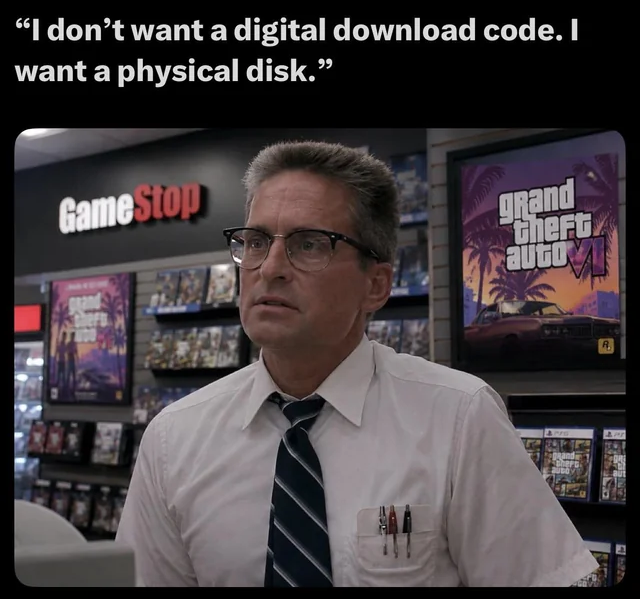
The 2021 Hideo Kojima’s (a Japanese video game designer, writer, director, producer, and internet personality, best known for the Konami’s Metal Gear franchise) prediction is becoming reality: physical disc production is ending in January 2028 for new games releasing on PlayStation consoles, and even if you “bought” a digital game in the past, you have just typically purchased a revocable license rather than owning the game itself!
Reverse engineering for software preservation
Software, more than any other product you buy, at some point, went obsolete, and due to the fact that you own nothing, they can disappear from one day to other.
“Hey, listen,” I said. “You know those ducks in that lagoon right near Central Park South? That little lake? By any chance, do you happen to know where they go, the ducks, when it gets all frozen over? Do you happen to know, by any chance?” I realized it was only one chance in a million.”
Like the ducks of the 1951 book The Catcher in the Rye by J.D. Salinger, where do software that have been released for a long time and are no longer of commercial interest because they are deprecated or obsolete go?

If a software product (or video game) reaches end-of-life and becomes abandonware (this term is controversial, by the way, as distributing out of print software and games is still considered software piracy), users are confronted with several potential problems: missing purchase availability (besides used software) and missing technical support, e.g. compatibility fixes for newer hardware and operating systems.
If you are trying to escape this situation, remember that the hardest worker is not always the winner.
The winner is usually the person solving the right problem while everyone else is busy solving the wrong me.
I can help with the right problem, so just give me a call!
Enjoy your summer!
Even if I was born in Venice, my family is from the South of Italy, which is a big melting pot of different cultures: Greeks, Spaniards, Arabs (and even Vikings!) etc… and one thing we have in common with all these cultures is the siesta, during summer, while the temperature hits 45° C or more. Spending my vacation every year visiting my grandparents in Puglia as a teenager, I remember hating those 3 hours between 2 PM and 5 PM, in which everything went quiet, and I would have liked to play football with my friends or meet beautiful girls in the garden.
How things have changed…! Now those 3 hours look to me like a blessing. A time to relax, read a book, and sleep for a few hours. Lazy, calm, and recharging.
And this song immediately rings in my mind:
Summertime, and the livin’ is easy.
Fish are jumping, and the cotton is high.
Your dad is rich, and your mother good lookin’,
so hush little baby, don’t you cry.
This is the very famous lullaby, composed in 1934 by George Gershwin for the 1935 opera Porgy and Bess, in which the singer reassures the child about his present and future.
As that singer, I’m reassuring you all (friends, and mostly, enemies..) about the present and future: enjoy your time off, go outside drinking, hiking, sailing, bird-watching, whatever you like, and see you all in September here, in my Data-Hungry spot!

—–
Stay data-hungry. Stay data-foolish.
Your Friendly Neighborhood Digital Consultant